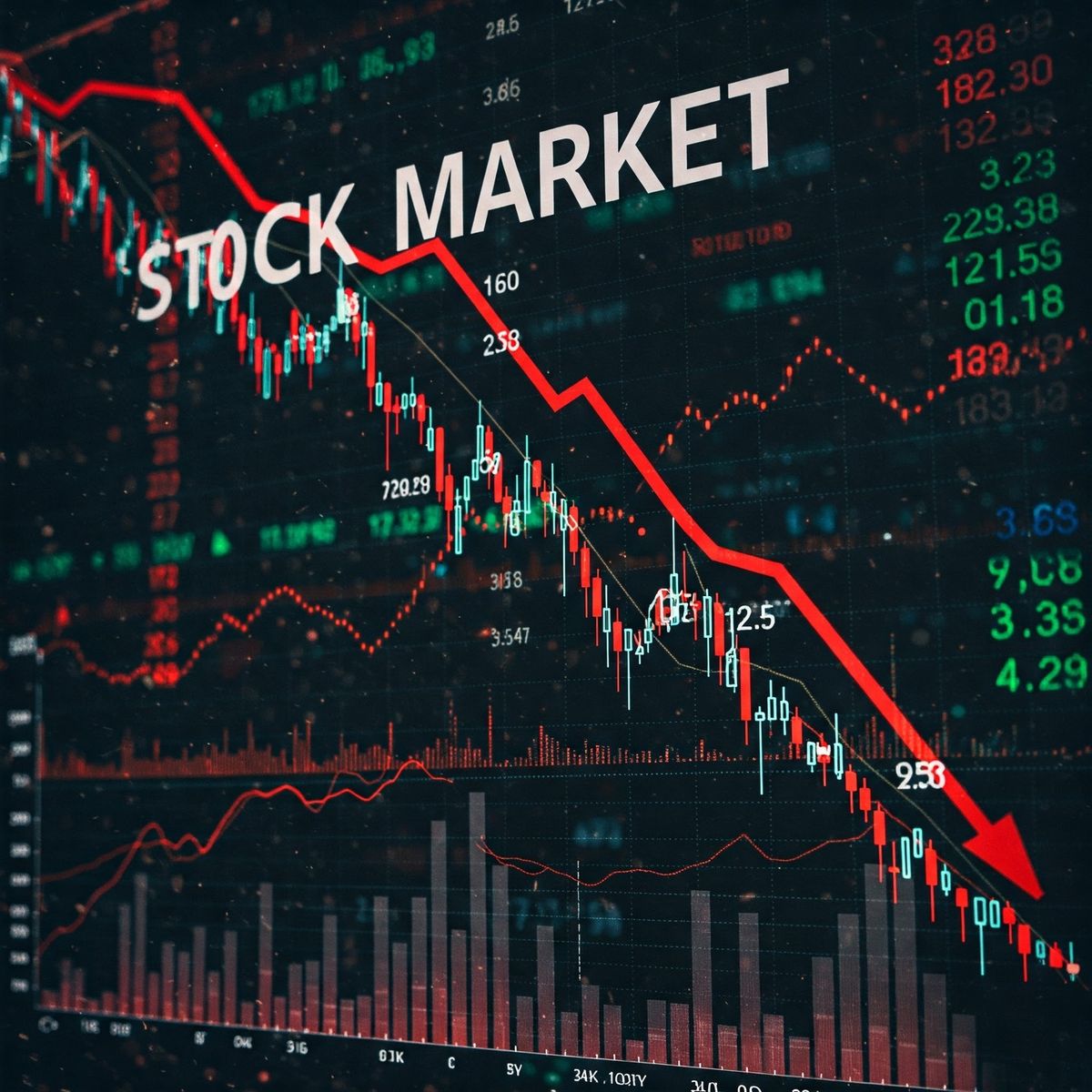
You check your investment app on a Monday morning and everything is red. Numbers are down. Arrows are pointing south. Your heart sinks. What is going on? Is the market crashing? Should you sell? Should you panic?
Welcome to one of the most misunderstood parts of investing: stock market volatility. If you are going to invest in stocks, whether on the Nigerian Stock Exchange (NSE) or in US stocks through apps like Bamboo or Trove — understanding why prices go up and down is not optional. It is essential. This post will break it all down in plain English.
What Are Red Days and Green Days?
On any given trading day, a stock’s price either goes up, stays flat, or goes down. Most stock apps display these movements using colours: green means the price went up compared to the previous close, and red means it went down. A “green day” is a day when more stocks are rising than falling. A “red day” is a day when more stocks are falling than rising. These are normal. They happen every single week. The market is not supposed to go up every day — that is not how it works.
What Causes Stock Prices to Move?
Stock prices move because of supply and demand. When more people want to buy a stock than sell it, the price goes up. When more people want to sell than buy, the price goes down. But what drives people to buy or sell? Many things: Company earnings reports, if a company earns more profit than expected, its stock often rises. If it disappoints, it falls.
Economic news, inflation data, interest rate decisions by the Central Bank of Nigeria (CBN) or the US Federal Reserve, GDP numbers — all of these affect how investors feel about the future.
World events like a war, a pandemic, a political crisis can send markets sharply down as investors become fearful.
Sentiment and rumours, sometimes stocks move simply because a lot of people believe something will happen, even before it does.
Currency changes for Nigerians investing in foreign stocks, a weaker naira can actually increase the naira value of your US dollar investments. This is a silver lining many people miss.
Why Volatility Is Normal
Here is a fact most new investors do not know: the stock market has historically gone down in value about 3 out of every 10 years. And yet, over the long run, it has always gone back up and reached new highs.
The S&P 500, which tracks the 500 largest US companies, has averaged about 10% annual returns over the past 90+ years, including all the crashes, wars, pandemics, and recessions in between. Volatility is the price you pay for those long-term gains. The market goes up in a bumpy, uncertain line — not a smooth one. If you cannot tolerate the red days, you will never stay invested long enough to benefit from the green years.
The Biggest Mistake Investors Make During Red Days
Selling in panic. It is the single most costly mistake retail investors make.
When markets fall sharply, emotions take over. People sell their stocks at a loss to “stop the bleeding.” Then, weeks later, those same stocks recover — and the person who panicked has locked in a permanent loss.
Think of it this way: if your favourite store announced a 30% discount on everything, you would rush to buy more — not sell what you already own. A market dip is effectively a sale on stocks. Long-term investors know this and use red days to buy more at lower prices.
Invest in Nigerian and Foreign shares to enjoy passive income here: https://app.investbamboo.com/invite/anne162508
Practical Tips for Surviving Volatile Markets
- Only invest money you do not need in the short term. Do not put next month’s rent into stocks.
- Avoid checking your portfolio every hour. Constant checking increases anxiety and the urge to act impulsively.
- Use a strategy called dollar-cost averaging, invest a fixed amount regularly, regardless of whether the market is up or down. This smooths out your average purchase price over time.
- Diversify. Do not put all your money in one stock. Spread across sectors and even asset types.
- Remind yourself of your goal. If you are investing for 10–20 years, a bad week or month is almost irrelevant.
The NSE and Volatility in Nigeria
The Nigerian Stock Exchange (now NGX) is a smaller, less liquid market compared to the US stock exchanges. This means that when a few large investors move money, it can cause sharper swings. Policy changes, oil prices, and foreign exchange rates also play major roles.
This does not make the NGX bad — it means you need to be even more patient and strategic as a Nigerian investor. Long-term, well-run companies like Dangote Cement, Guaranty Trust Holding Company (GTCO), and Zenith Bank have rewarded patient investors over the years.
Earn over 20% with Stanbic IBTC Money Market Funds: https://www.stanbicibtcfundsmanagement.com/invest-now-x8p45e48
Conclusion
The investors who build wealth are not the ones who avoid red days, they are the ones who stay calm during them. Volatility is not danger; it is opportunity dressed in a scary outfit. What is your biggest fear when you see your stocks go red? Drop it in the comments below, let us talk about it.
JOIN MY FREE TELEGRAM COMMUNITY (be the first to get informed) https://t.me/+SNSQzX94_Gk1M2M0