
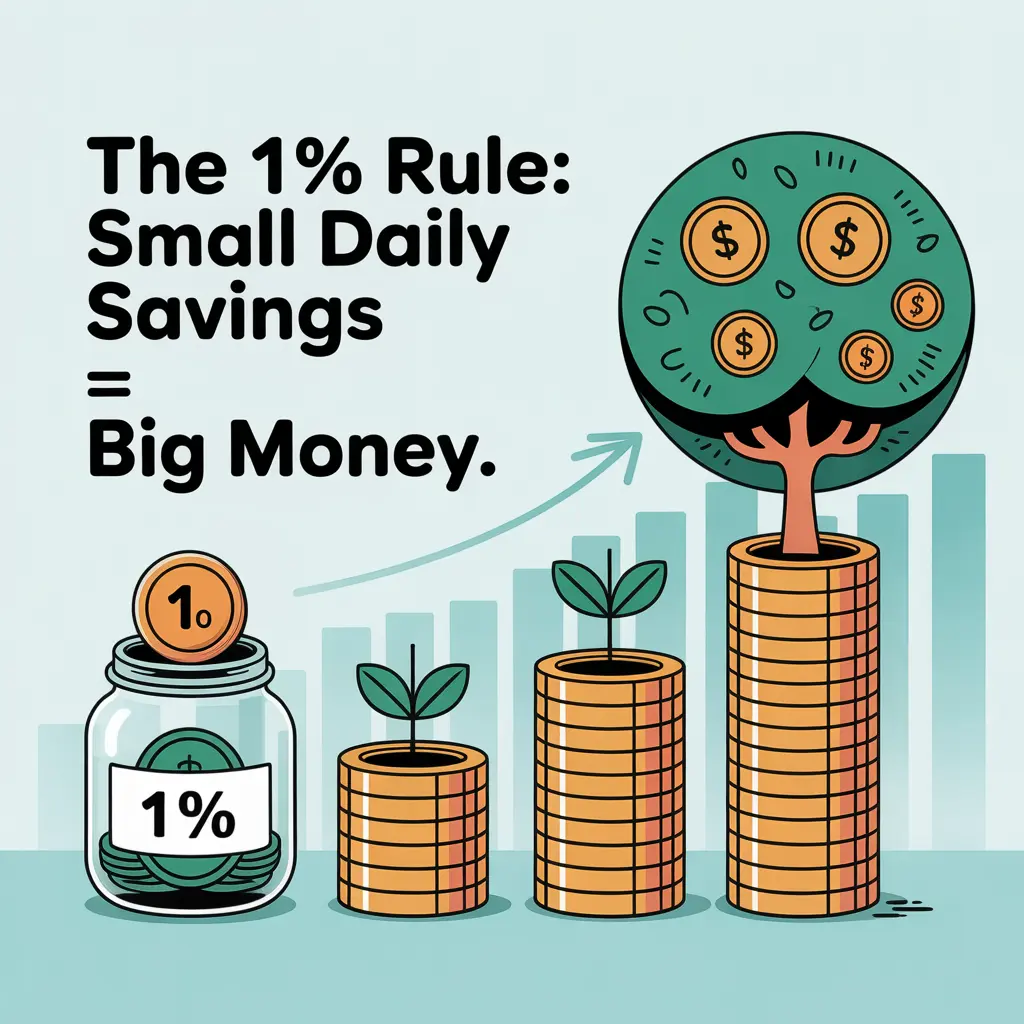
Most people think building wealth requires dramatic moves like huge investments, massive salary increases, or extreme budgeting. But in reality, wealth is. Most people think building wealth requires dramatic moves — huge investments, massive salary increases, or extreme budgeting. But in reality, wealth is often built quietly, through small, consistent actions repeated over time.
That’s where the 1% Rule comes in.
The idea is simple: improve your finances by just 1% each day — or save a small percentage consistently — and let time do the heavy lifting. It doesn’t sound dramatic. It doesn’t feel life-changing at first. But over months and years, the results compound into something powerful.
If you’ve ever felt like your income isn’t “big enough” to save or invest meaningfully, this rule might completely change how you see money.
What Is the 1% Rule in Personal Finance?
The 1% Rule is built on one core principle:
Small, consistent improvements create massive long-term results.
In financial terms, it can mean:
- Saving just 1% more of your income
- Cutting expenses by 1%
- Increasing your investments gradually
- Improving your money habits little by little
Instead of trying to overhaul your entire financial life in one month, you focus on small daily or monthly changes.
And small changes are sustainable.
Why Small Savings Matter More Than You Think
Many people delay saving because they think:
- “It’s too small to matter.”
- “I’ll start when I earn more.”
- “₦5,000 or ₦10,000 won’t change anything.”
But here’s the truth: consistency beats size.
Let’s say you save ₦10,000 monthly. That’s ₦120,000 a year. Over 5 years, that’s ₦600,000 — and that’s before adding any investment growth.
If you increase that by just 1% regularly, your savings accelerate without feeling painful.
The power is not in the amount.
The power is in the habit.
The Psychology Behind the 1% Rule
Big financial goals can feel intimidating:
- Save ₦5,000,000
- Pay off ₦2,000,000 in debt
- Invest aggressively
Your brain resists big and uncomfortable changes, but 1%? That feels manageable. Small adjustments don’t trigger financial anxiety, don’t feel restrictive, don’t cause burnout. This is why gradual improvement works. It builds momentum without overwhelming you.
How to Apply the 1% Rule to Your Finances
Let’s break this into practical steps.
1. Increase Your Savings Rate by 1%
If you currently save 10% of your income, increase it to 11%. If you save ₦50,000 monthly, increase it to ₦50,500 or ₦51,000. It feels insignificant — but over time, it compounds.
You can do this every 3 months, every time you get paid or every time your income increases. Small increases become powerful over time.
2. Reduce Spending by 1%
You don’t need extreme budgeting. Look at your subscriptions, food delivery, impulse shopping, data plans and transportation costs. Cutting 1% from unnecessary spending barely affects your lifestyle — but strengthens your savings.
3. Improve Your Income by 1%
The 1% Rule also applies to earning.
Ask:
- Can I increase my rate slightly?
- Can I learn a new skill?
- Can I add a small side income?
You don’t need to double your income overnight. But small improvements compound. A 1% monthly income increase across a year creates noticeable growth.
4. Invest 1% More Consistently
If you invest ₦20,000 monthly, increase it slightly. Better yet, automate it. When investments happen automatically:
- You avoid emotional decisions
- You build discipline
- You benefit from long-term growth
Time + consistency = wealth.
The Compounding Effect: Where the Magic Happens
Compounding is when your money earns returns — and those returns earn more returns. The earlier you start, the more powerful this becomes. Imagine:
- Investing ₦30,000 monthly
- Earning moderate returns over 15–20 years
Even small increases along the way dramatically change the outcome. The 1% Rule works because it fuels compounding without forcing extreme sacrifice.
Real-Life Example
Let’s compare two people:
Person A
- Saves nothing for 5 years
- Then tries to aggressively save huge amounts
Person B
- Starts saving small amounts immediately
- Increases contributions gradually by 1% over time
Over 10–15 years, Person B often ends up ahead — simply because they started earlier and stayed consistent. The biggest advantage in wealth building is not income. It’s time.
Why Most People Ignore the 1% Rule
It feels too small. We’re conditioned to believe that only big moves matter. But most financial transformation stories are built on small habits repeated daily:
- Tracking expenses
- Saving automatically
- Investing monthly
- Increasing contributions gradually
Boring consistency builds exciting results.
Invest in a High-Yield Savings Account (don’t settle for 3% banks give you when you can get 20% on your savings): www.app.optimus.ng/register?ref=4de524
Earn over 20% with Stanbic IBTC Money Market Funds: https://www.stanbicibtcfundsmanagement.com/invest-now-x8p45e48
How to Start Today
You don’t need a perfect plan. Start with one small action:
- Transfer ₦5,000 into savings
- Cancel one unused subscription
- Increase your automatic savings by 1%
- Open an investment account
- Track your spending this week
That’s it. Then repeat tomorrow.
The Long-Term Mindset Shift
The 1% Rule teaches patience. It shifts your thinking from: “I need fast results” to: “I need steady progress.” Wealth built slowly is more stable and less stressful. And the best part? Small improvements don’t disrupt your lifestyle — they quietly upgrade it.
Get your Complete Budget & Money Tracker here: https://selar.com/3h70r3
Join the VIP Community and get expert guidance: https://www.financewithanne.com/legacy-builders-network
Conclusion
You don’t need to be extreme to become financially secure; you need to be consistent. The 1% Rule proves that: small savings matter, tiny increases count, minor improvements compound. Start small. Stay consistent. Increase gradually. Years from now, you’ll be grateful you didn’t wait for “big money” before building wealth. Because big money is often the result of small, repeated decisions.